OTED’s Humanitarian Mission: 220 Families Aid for Deportees – Hope Restored
 Hashmat Ullah Khuram
In the face of a deepening humanitarian crisis, the non-profit organization OTED stepped up to help some of the most vulnerable: Afghan families forcibly deported from Pakistan and Iran. In cooperation with the Ministry of Refugees and Repatriation of Afghanistan, OTED delivered food and non-food relief to 220 families, providing a lifeline to those returning to uncertain futures. This article describes how the project unfolded, what it achieved, and why it matters, now more than ever.
Afghan forced deportations from Pakistan & Iran
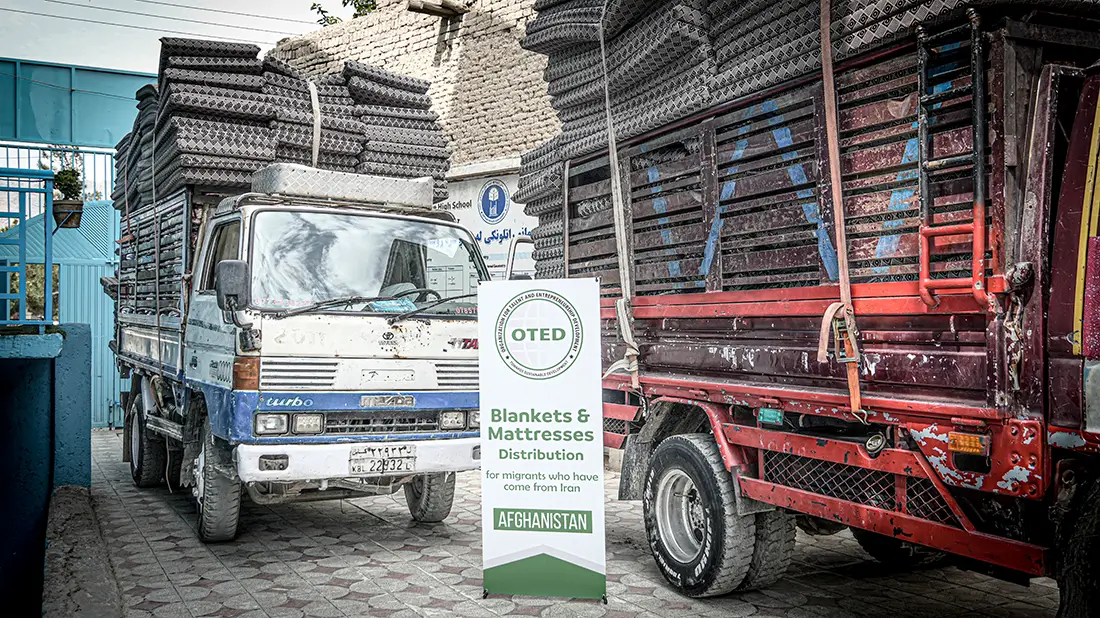
Growing refugee return flows
In recent years, countries such as Pakistan and Iran have increased pressure on undocumented Afghan migrants, leading to waves of forced deportations.
One recent report stated that, in just a short span, hundreds of Afghan families were forcibly returned to Afghanistan, often under harsh conditions.
According to the Ministry of Refugees and Repatriation, many of those deported were detained, had their homes or shops seized, and were returned with little to no possessions, facing both material and emotional distress.
Challenges faced by returnees on arrival
Upon return, many families struggled with:
- Loss of livelihood and savings – property and assets often confiscated during deportation.
- Lack of shelter, food, and essentials – returnees sometimes arrive with only clothes on their back.
- Social stigma and limited access to formal assistance networks – making urgent relief even more critical.
This crisis left thousands vulnerable, intensifying the need for immediate humanitarian aid.
Why aid was urgently needed: The plight of deported Afghan families
Loss of homes, savings, and belongings during deportation
Many returning families reported that their homes, shops, and personal belongings were seized or looted during forced deportations.
As a result, they returned to Afghanistan effectively empty-handed, with no shelter, no means of income, and no financial safety net.
Food insecurity and lack of essentials on return
Without savings or support networks, these families faced severe food insecurity and lacked basic non-food necessities, such as bedding, cooking supplies, mattresses, and more.
Given the sudden and large influx of returnees, the pressure on local resources was significant, highlighting the urgent need for coordinated humanitarian response.
In this context, OTED’s intervention was timely and critical, to fill the gaps left by displacement, loss, and lack of resources.
OTED’s Response: Mobilizing resources for returning families
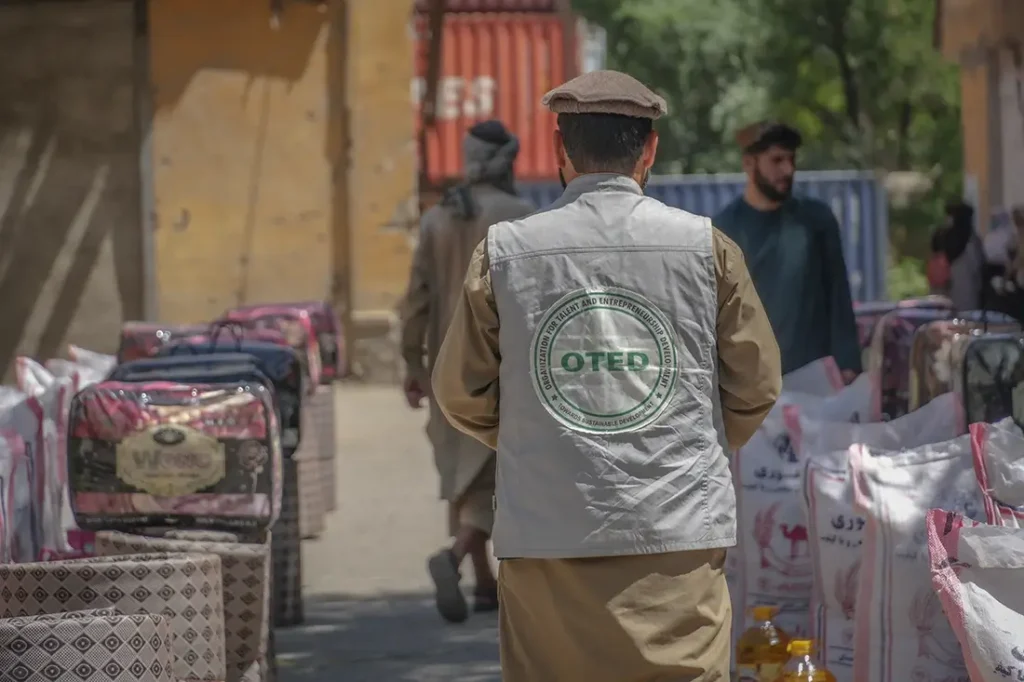
Scope and scale of the aid – 220 families helped
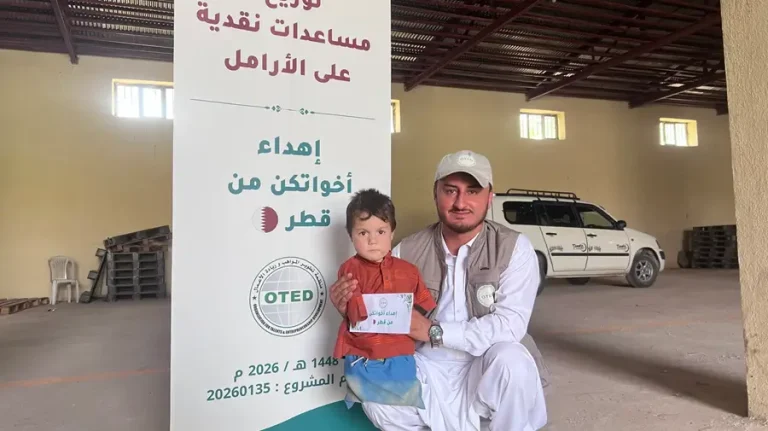
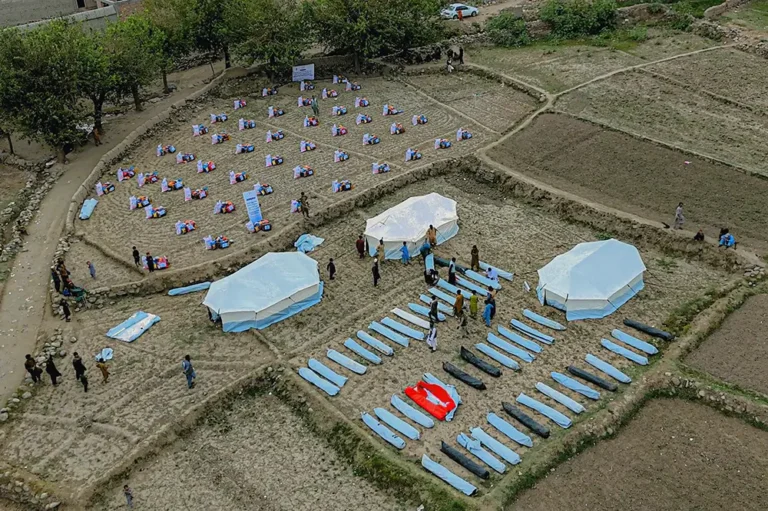
Recognizing the urgent needs of deported families, OTED organized a relief operation targeting 220 families, providing them with a comprehensive aid package.
This was not a small gesture, 220 families can amount to over 1,000 individuals, depending on family size, representing a significant number of returnees who would otherwise face extreme hardship.
Partnership with the Ministry of Refugees
The effort was carried out in collaboration with the Ministry of Refugees and Repatriation, leveraging governmental channels to identify returnee families and coordinate distribution, ensuring efficiency, legitimacy, and maximum reach.
This kind of collaboration enhances accountability and enables better coordination in times of large-scale humanitarian need.
What the aid packages contained
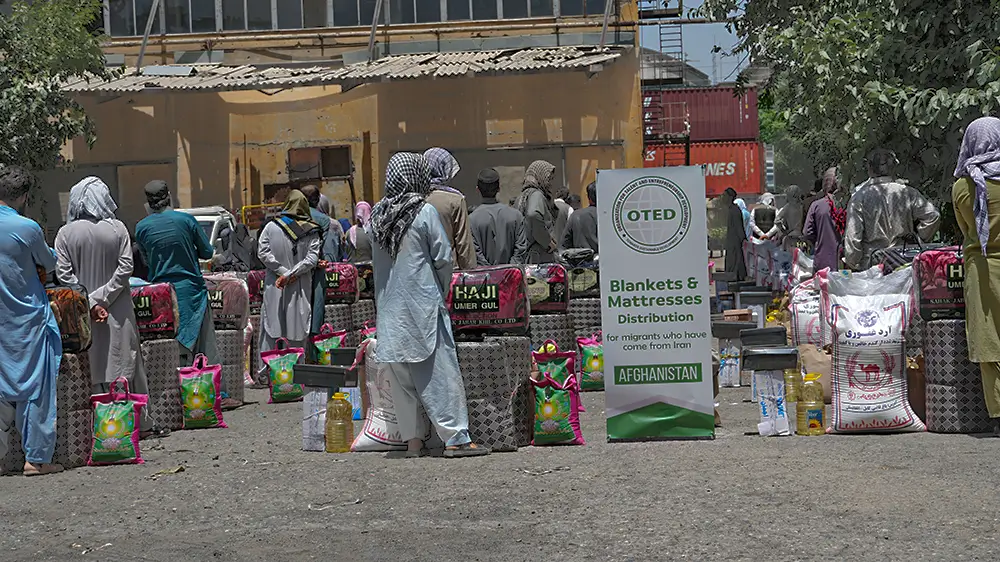
The aid packages distributed by OTED included:
- Food items: staples such as flour, rice, cooking oil, pasta, salt.
- Non-food essentials: mattress, unspecified non-food items (possibly blankets, bedding, household items), and cooking supplies.
- Perhaps other essentials – reflecting a holistic approach to relief that goes beyond immediate food needs to basic living conditions.
This thorough composition of aid helped ensure not only survival, but also dignity, comfort, and a measure of stability for returnee families.
The Aid Package: What 220 Families Received
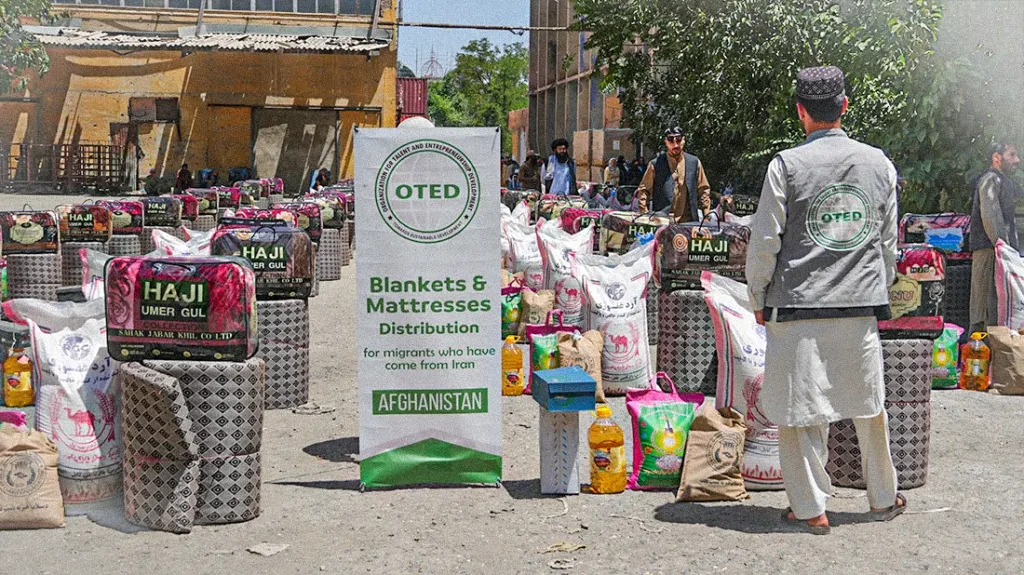
Food items: staples for immediate survival
Food is the most basic human need, especially for displaced families who have lost everything. The aid packages included fundamental staples:
- Flour – a primary basis for bread, a dietary mainstay.
- Rice – providing carbohydrates and nutritional value.
- Cooking oil – essential for preparing meals.
- Pasta – a quick, versatile food item.
- Salt – necessary for basic cooking.
These items together ensured that families could prepare simple but nutritious meals, alleviating immediate hunger and food insecurity.
Non-food essentials: dignity and relief beyond hunger
Recognizing that food alone is not enough, OTED’s relief included non-food items essential for daily living:
- Mattresses, for rest and protection from cold or hard floors.
- Likely blankets, bedding, and other household items (as typical in humanitarian aid packages), though not all were specified.
By providing such items, OTED helped restore a sense of normalcy, comfort, and dignity, critical after traumatic displacement.
Distribution Strategy and Outreach – Getting Help Where It’s Needed
How beneficiaries were identified
Working through the Ministry of Refugees and Repatriation allowed OTED to access official lists or networks of returnee families, ensuring aid reached those most in need and reducing risk of duplication or missed cases.
Logistics of distribution amid challenging conditions
Delivering aid in post-deportation contexts requires coordination, security, and sensitivity. OTED likely had to manage transport, storage, fair distribution, and record-keeping, a challenging task when families are dispersed, possibly lacking stable addresses, and arriving at varying times.
Such operations require careful planning, coordination, and community trust which OTED appears to have built over years of work across Afghanistan.
Impact on families: Beyond aid – preserving dignity and hope
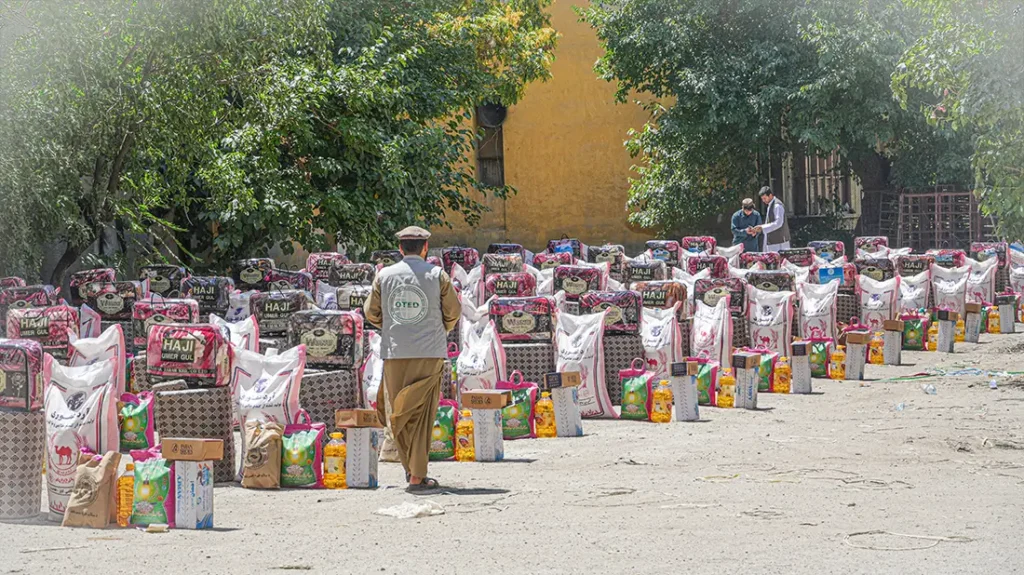
Immediate relief: food security and basic needs met
For many deported families, the OTED package likely represented their first stable meal and a warm bed in days or weeks. Such aid can protect them from hunger, malnutrition, and exposure, crucial especially in uncertain post-return conditions.
Psychological impact: restoring a sense of normalcy
Having a mattress, food, and household essentials may restore a sense of home, a powerful psychological boost after the trauma of deportation, displacement, and uncertainty.
Moreover, such support can help families feel welcomed back by their country, not abandoned, a vital component for social cohesion and reintegration.
OTED’s Broader Mission: Education, entrepreneurship, health & relief
While emergency aid is crucial in crises, OTED doesn’t stop there. The organization operates multiple programs beyond relief:
- Vocational training and entrepreneurship support to help families rebuild livelihoods.
- Education support, skills development, and social programs targeting long-term stability and growth.
- Healthcare initiatives, including medical care and specialized treatment (e.g. surgeries) for vulnerable individuals.
By integrating relief with long-term development programs, OTED seeks sustainable recovery, helping beneficiaries not just survive, but rebuild their lives with dignity and hope.
Collaboration with Government and Other Agencies
Role of the Ministry of Refugees & Repatriation
The Ministry plays a central role in coordinating returnees, documenting arrivals, and working with NGOs like OTED to channel aid where it’s most needed. Recent government statements confirm the increasing number of forced returnees and call for aid agencies’ urgent involvement.
Such collaboration ensures that aid distribution aligns with national records, reducing duplication, and helps target the most vulnerable, the newly returned families who lack resources.
Importance of coordinated humanitarian response in crisis
Given the scale of deportations and returnees, no single organization can meet all needs. Partnerships between NGOs, government ministries, and possibly international actors are essential to provide food, shelter, healthcare, and long-term support.
OTED’s work demonstrates how a well-organized NGO can fill critical gaps when coordinated with government efforts.
Challenges and Lessons Learned from the Operation
Identifying genuine need vs limited resources
With limited resources and many families in need, deciding which families to support is difficult. Transparent criteria and fair selection are crucial. Collaborating with the Ministry helps, but still some genuinely needy families might be missed without robust outreach.
Logistical hurdles: transport, security, record-keeping
Delivering aid to displaced families, often arriving at different times, possibly scattered, involves transport, warehousing, safe distribution, and accurate records to avoid duplication or fraud.
These logistical and administrative challenges demand planning, coordination, and trust, especially in Afghanistan’s complex environment.
The need for sustainable follow-up support
While immediate aid relieves urgent needs, long-term reintegration requires follow-up: livelihood support, skills training, possibly shelter, access to healthcare, education for children, something OTED aims to provide but that requires continued resources and commitment.
What’s Next: OTED’s Vision for Continued Support of Returnees
Plans for further distributions (food, shelter, non-food support)
Based on increased returnee flows, OTED may plan additional aid cycles, supporting more families with food, bedding, household items, and other essentials.
Long-term reintegration: livelihoods, skills training, social programs
Beyond relief, OTED’s broader programs, vocational training, entrepreneurship support, education, social support, can help deported families rebuild stable lives.
For example: helping a formerly displaced person start a small business, or providing training to youth so they can earn a living, preventing cycles of poverty and displacement.
How Supporters and Donors Can Help Amplify the Impact
Donations, volunteering, awareness raising
Individuals, donors, and philanthropists can contribute to OTED’s efforts, whether by donating funds, volunteering time, or raising awareness about the challenges faced by deported Afghan families.
Each contribution helps deliver aid faster, more fairly, and more sustainably.
Partnering with OTED for broader outreach
Local and international organizations, businesses, or community groups can partner with OTED, supporting specific programs, expanding reach, or offering resources (logistics, distribution networks, shelters) to maximize impact.
Such collaboration strengthens the overall humanitarian response, reduces duplication, and reaches more families in need.
Conclusion: The significance of solidarity in times of crisis
The story of OTED’s 220-family relief project is more than a distribution of food and mattresses. It’s a powerful statement of solidarity, a promise that even in the face of forced displacement and hardship, Afghan communities will not be left alone.
By working with the Ministry of Refugees, mobilizing resources, and delivering aid with care and dignity, OTED has offered hope, relief, and a chance to rebuild for many deported families.
In times like these, community support, humanitarian action, and compassion become the foundation of resilience. OTED’s work reminds us that together, we can help restore lives, dignity, and hope, one family at a time.
FAQs
Q1: What does “OTED” stand for?
A: OTED stands for Organization for Talent and Entrepreneurship Development, a registered Afghan non-profit working on education, relief, health, and community development.
Q2: Why did OTED focus on deported Afghan families?
A: Because forced deportations from Pakistan and Iran displaced many families who lost homes, belongings, and livelihoods, they returned empty-handed, facing hunger, lack of shelter, and dire need. OTED’s relief aimed to meet their urgent needs and preserve their dignity.
Q3: How many families did OTED help in this project?
A: The project provided aid to 220 families.
Q4: What kind of aid did each family receive?
A: Each family received a package including food items (flour, rice, cooking oil, pasta, salt) and non-food items (mattress, other essential household items) to address immediate needs.
Q5: Did OTED work alone?
A: No. OTED collaborated with the Ministry of Refugees and Repatriation, leveraging governmental channels for proper identification, coordination, and efficient distribution.
Q6: Is this a one-time effort or part of longer-term support?
A: While this distribution addressed urgent needs, OTED’s broader mission involves long-term support through education, vocational training, entrepreneurship, health, and social programs, aiming at lasting recovery and stability for Afghan communities.